Descripción del Producto
Especificación DE Eje de transmisión de la toma de fuerza —Pista de carreras:
Desarrollamos y fabricamos muchas piezas de repuesto para tractores japoneses.
Nombre del producto: Disco de embrague para transmisión de tractor japonés B1400 B7000
Modelos de tractor que podemos suministrar: B1500/1400, B5000, B6000, B7000, TU1400, TX1400, TX1500, YM F1401, YM1400, etc.
Las piezas, por ejemplo: Neumáticos, llanta Jante, kit de acoplamiento KB-TX de 3 puntos. Tubo de escape Volante. Kit de acoplamiento YM F14/F15, eje de engranajes, eje de toma de fuerza, cardán de toma de fuerza, chaveta, regulador, etc.
La mayoría de las piezas de repuesto están en stock. Si le interesa alguna, no dude en contactarme.
Otras piezas relevantes para automóviles o maquinaria que hemos fabricado en nuestro taller son las siguientes:
Piezas y conjuntos de ejes de transmisión,
Piezas y conjuntos de juntas universales,
ejes de transmisión de la toma de fuerza,
Ejes estriados,
Yugos deslizantes,
Yugos de soldadura,
Horquillas de brida,
Columnas de dirección,
Bielas,
etc.
Descripción del Producto
Eje de transmisión de la toma de fuerza Artículo:
| Artículo | Tamaño de la revista cruzada | 540dak-rpm | 1000 rpm | |||
| Serie 1 | 22 mm | 54 mm | 12 kW | 16 CV | 18 kW | 25 CV |
| Serie 2 | 23,8 mm | 61,3 mm | 15 kW | 21 CV | 23 kW | 31 CV |
| Serie 3 | 27 mm | 70 mm | 26 kW | 35 CV | 40 kW | 55 CV |
| Serie 4 | 27 mm | 74,6 mm | 26 kW | 35 CV | 40 kW | 55 CV |
| Serie 5 | 30,2 mm | 80 mm | 35 kW | 47 CV | 54 kW | 74 CV |
| Serie 6 | 30,2 mm | 92 mm | 47 kW | 64 CV | 74 kW | 100 CV |
| Serie 7 | 30,2 mm | 106,5 mm | 55 kW | 75 CV | 87 kW | 18 CV |
| Serie 8 | 35 mm | 106,5 mm
|
70 kW | 95 CV | 110 kW | 150 CV |
| Serie 38 | 38 mm | 102 mm | 70 kW | 95 CV | 110 kW | 150 CV |
Perfil de la empresa
Certificaciones
Preguntas frecuentes
/* 22 de enero de 2571 19:08:37 */!function(){function s(e,r){var a,o={};try{e&&e.split(“”,).forEach(function(e,t){e&&(a=e.match(/(.*?):(.*)$/))&&1
| Tipo: | Wide Angle Joint |
|---|---|
| Uso: | Procesamiento de productos agrícolas, infraestructura agrícola, cosechadoras, siembra y fertilización, trilla de granos, limpieza y secado. |
| Material: | Acero inoxidable |
| Fuente de energía: | Eje accionado por la toma de fuerza |
| Peso: | Estándar |
| Servicio postventa: | 1 año |
| Muestras: |
US$ 300/Piece
1 pieza (pedido mínimo) | |
|---|
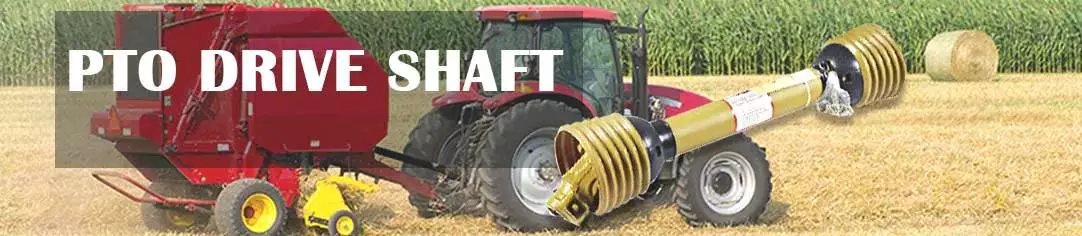
How do tractor PTO shafts contribute to the efficiency of agricultural tasks like mowing?
Tractor power take-off (PTO) shafts play a crucial role in enhancing the efficiency of agricultural tasks like mowing. Here’s a detailed explanation of how PTO shafts contribute to efficiency:
1. Transferencia de potencia: Tractor PTO shafts enable the transfer of power from the tractor’s engine to the mowing implement. The PTO shaft connects the rotating power source (tractor) to the driven component (mower), allowing the transmission of mechanical power. This direct power transfer eliminates the need for separate engines or motors on each implement, reducing complexity and improving overall efficiency.
2. Consistent Power Output: PTO shafts provide a consistent and reliable power output to the mowing implement. The rotational speed and torque generated by the tractor’s engine are efficiently transmitted through the PTO shaft to the mower. This consistent power supply ensures that the mower operates at its optimal performance, resulting in efficient cutting and mowing operations.
3. Adaptability to Different Implements: Tractor PTO shafts are designed to be versatile and adaptable to various agricultural implements, including mowers. They come in standard sizes and configurations, allowing compatibility with a wide range of mowing equipment. This adaptability enables farmers to use different types of mowers, such as rotary mowers, flail mowers, or sickle-bar mowers, with their tractors, providing flexibility and efficiency in tackling different mowing tasks.
4. Adjustable Speed and Height: Tractor PTO shafts, combined with the mower’s design, allow for adjustable cutting speed and cutting height. By adjusting the tractor’s engine speed, the PTO shaft’s rotational speed can be varied, enabling control over the cutting speed of the mower. Additionally, the height adjustment mechanism on the mower allows farmers to set the desired cutting height, ensuring efficient cutting and optimal performance in different field conditions.
5. Efficient Coverage and Maneuverability: Tractor-mounted mowers connected through PTO shafts provide efficient coverage and excellent maneuverability. The wide cutting swath of the mower, combined with the tractor’s mobility, allows for quick and efficient mowing of large areas. This reduces the time and effort required to complete mowing tasks, increasing overall efficiency in agricultural operations.
6. Integration with Tractor Controls: Tractor PTO shafts are integrated with the tractor’s control systems, making it convenient for the operator to engage or disengage the PTO as needed. The operator can control the PTO engagement from the tractor’s cabin, allowing for quick start-up and shutdown of the mower. This ease of control enhances operational efficiency and ensures safe and precise mowing operations.
By facilitating power transfer, providing consistent power output, adaptability to different implements, adjustable speed and height, efficient coverage and maneuverability, and integration with tractor controls, PTO shafts significantly contribute to the efficiency of agricultural tasks like mowing. They enable farmers to accomplish mowing operations effectively, saving time, labor, and resources in the process.
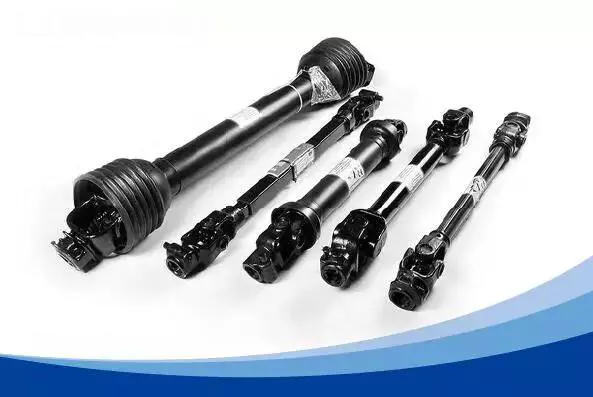
¿Cuáles son los signos comunes de desgaste o daño en los componentes del eje de la toma de fuerza del tractor?
Varias señales comunes indican desgaste o daños en los componentes del eje de la toma de fuerza del tractor. Estas señales pueden ayudar a identificar posibles problemas y a realizar las reparaciones o sustituciones necesarias. A continuación, se presentan algunas de las señales más comunes a tener en cuenta:
1. Ruido y vibración: El ruido y la vibración excesivos durante el funcionamiento de la toma de fuerza pueden indicar componentes desgastados o dañados. Los ruidos inusuales de traqueteo, rechinido o golpeteo, junto con la vibración excesiva, pueden sugerir problemas como juntas universales desalineadas o desgastadas, cojinetes dañados o estrías del eje desgastadas.
2. Fuga de grasa: La fuga de grasa del eje de la toma de fuerza (TDF) es señal de un posible problema. Puede indicar desgaste o daños en los sellos, lubricación inadecuada o daños en los sellos de los cojinetes. La fuga de grasa debe solucionarse de inmediato para evitar daños mayores a los componentes.
3. Dificultad para involucrarse o desvincularse: Si el acoplamiento o desacoplamiento de la toma de fuerza (TDF) se vuelve difícil o poco fiable, podría indicar desgaste o daños en los discos de embrague, las estrías o los mecanismos de bloqueo. La dificultad para acoplar o desacoplar la TDF puede afectar la transmisión de potencia y requerir atención inmediata.
4. Juego excesivo del eje: Un juego o movimiento excesivo en el eje de la toma de fuerza puede indicar desgaste o daños en las juntas universales o las estrías. Si se observa holgura o juego al girar el eje manualmente, esto sugiere que los componentes podrían necesitar inspección y, posiblemente, reemplazo.
5. Disminución de la potencia de salida: Una disminución notable en la potencia o un rendimiento reducido durante el funcionamiento de la toma de fuerza (TDF) puede indicar problemas con el eje de la TDF. Componentes desgastados o dañados, como embragues que patinan, estrías desgastadas o engranajes dañados, pueden provocar pérdida de potencia y una menor eficiencia.
6. Daños o desgaste visibles: La inspección visual del eje de la toma de fuerza (TDF) puede revelar signos de daño o desgaste. Busque grietas, dobleces, abolladuras u otros daños visibles en el eje o en los componentes de protección. Además, verifique si hay signos de desgaste en las estrías, horquillas o juntas universales, como marcas de desgaste excesivas, corrosión o piezas faltantes.
No se deben ignorar estas señales comunes de desgaste o daños en los componentes del eje de la toma de fuerza del tractor. Si se observa alguna de estas señales, se recomienda que un técnico cualificado inspeccione el eje de la toma de fuerza o, si es necesario, que lo reemplace. Tomar medidas preventivas puede evitar daños mayores, garantizar un funcionamiento seguro y mantener el rendimiento óptimo del sistema de toma de fuerza.
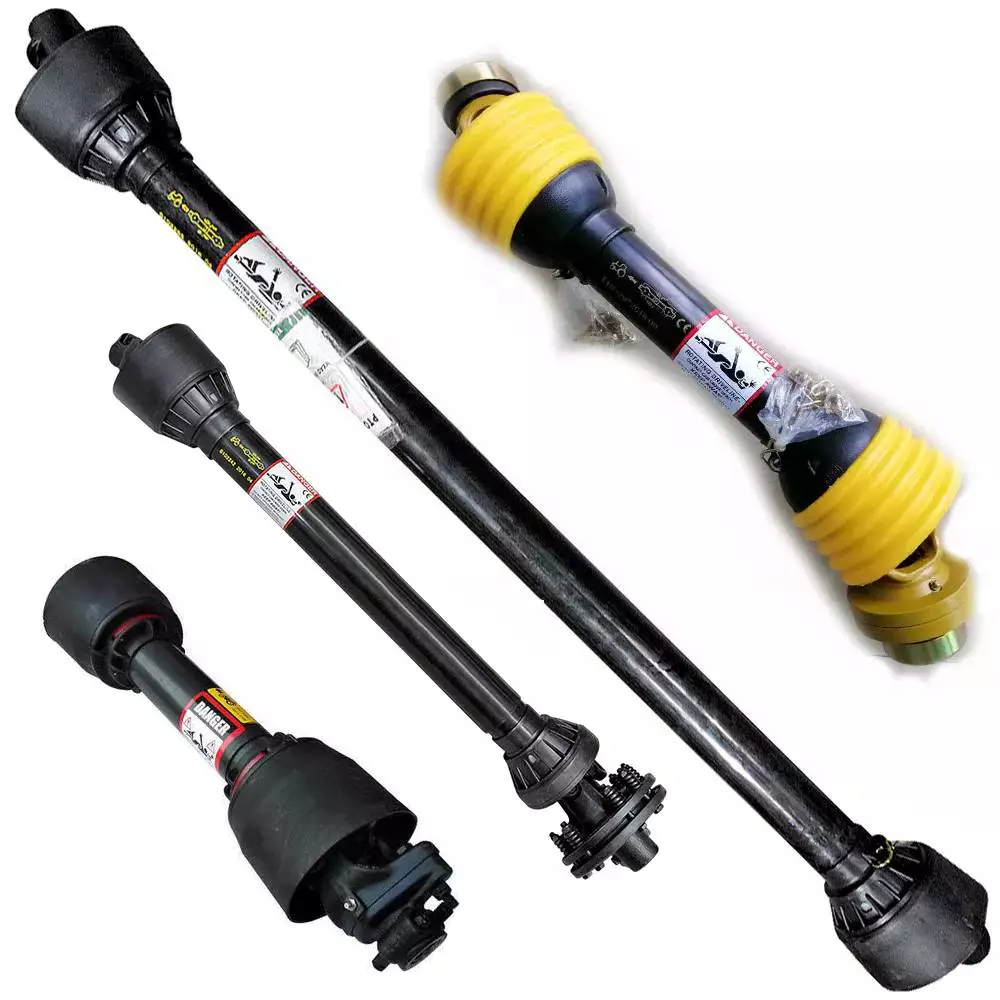
Which Types of Implements and Equipment Commonly Utilize Tractor PTO Shafts?
Tractor power take-off (PTO) shafts are widely used in conjunction with various implements and equipment in agricultural operations. These implements and equipment are designed to be powered by the rotational motion transmitted through the PTO shaft. Here are some of the commonly used types of implements and equipment that utilize tractor PTO shafts:
1. Rotary Mowers:
Rotary mowers are frequently powered by tractor PTO shafts. These mowers are used for cutting grass, weeds, and vegetation in agricultural fields, pastures, lawns, and roadside areas. The PTO shaft drives the rotary blades of the mower, enabling efficient cutting and maintenance of vegetation over large areas.
2. Tillers:
Tillers, also known as rototillers or cultivators, are implements commonly used in soil preparation. They are attached to the tractor’s PTO shaft and driven by its rotational motion. The PTO-driven tiller features rotating tines or blades that break up and aerate the soil, preparing it for planting or seeding.
3. Balers:
Balers are essential equipment in hay and forage production. They are used to gather and compress cut vegetation, such as hay or straw, into compact bales for storage or transportation. The PTO shaft powers the baler’s mechanisms, including the pickup, bale formation, and wrapping mechanisms, ensuring efficient baling operations.
4. Spreaders:
Spreaders, such as fertilizer spreaders or manure spreaders, are commonly used in agriculture to evenly distribute materials over a field. These implements are connected to the tractor’s PTO shaft, which drives the spreading mechanism. The rotational motion from the PTO shaft ensures the proper distribution of fertilizers, seeds, or other granular materials across the field.
5. Seeders and Planters:
Seeders and planters are implements used for sowing seeds and planting crops. They utilize the tractor’s PTO shaft to power the seed metering and planting mechanisms. The PTO-driven seeder or planter ensures accurate seed placement and spacing, facilitating efficient crop establishment and uniform plant growth.
6. Irrigation Pumps:
Irrigation pumps play a crucial role in agricultural irrigation systems. They are often connected to the tractor’s PTO shaft to provide the necessary power for pumping water from a water source, such as a well or reservoir, to irrigate fields or crops. The PTO-driven pump ensures a reliable and efficient water supply for irrigation purposes.
7. Wood Chippers:
Wood chippers are used to process tree branches, logs, and other woody materials into wood chips or mulch. Tractor PTO shafts power the chipping mechanism, which involves feeding the wood into rotating blades that chip the material into smaller pieces. PTO-driven wood chippers are commonly used in forestry operations, landscaping, and biomass production.
8. Post Hole Diggers:
Post hole diggers are implements used for digging holes in the ground, typically for installing fence posts or planting trees. The PTO shaft provides the rotational power required to operate the digging auger. The auger is driven into the ground, creating a hole of the desired diameter and depth.
9. Hay Rakes and Tedders:
Hay rakes and tedders are implements used in haymaking operations. They are connected to the tractor’s PTO shaft to power the rotating rake or tedder mechanisms. These implements help fluff, spread, and turn the cut hay, ensuring proper drying and curing before baling.
10. Grain Harvesters:
Grain harvesters, such as combine harvesters or forage harvesters, are large machines used for harvesting grain crops or forage crops. Tractor PTO shafts are utilized to power various components of the harvester, including the cutting head, threshing mechanism, and grain or forage collection systems. The PTO-driven harvesters streamline the harvesting process and improve efficiency.
These are just a few examples of the many implements and equipment that commonly utilize tractor PTO shafts. The versatility of PTO shafts allows for the efficient powering of a wide range of agricultural machinery, contributing to the productivity and effectiveness of farming operations.


editor by CX 2024-03-28