Descripción del Producto
| SHIPPING(Normally arrive port time in working days) | ||||
| Destination | Express/Courier | Ship by sea | Ship by air | Ship by EMS |
| DHL/FedEx/UPS/SF | ||||
| North America | 3-7 days | 15-24 days | 5-7 days | 10-12 days |
| South America | 3-7 days | 15-25 days | 5-7 days | 10-12 days |
| European Countries | 3-7 days | 20-30 days | 5-7 days | 10-12 days |
| Africa Countries | 3-7 days | 40-50 days | 5-7 days | 10-12 days |
| The Middle East | 3-7 days | 15-25 days | 5-7 days | 10-12 days |
| Australia | 3-7 days | 10-15 days | 5-7 days | 10-12 days |
Preguntas frecuentes
Q1. What is your terms of packing?
A: Generally, we pack our goods in our W brand box ..
Q2. What is your terms of payment?
A: T/T 30% as deposit, and 70% before delivery. We’ll show you the photos of the products and packages before you pay the balance.
Q3. What is your terms of delivery?
A: EXW, FOB, CFR, CIF.
Q4. How about your delivery time?
A: Generally, most of items we keep stock for all season . it will take 7to 10 days after receiving your advance payment. .if we didn’t have stock ,The delivery time depends on the items and the quantity of your order. Normaly 30 to 60days .
Q5. What is your sample policy?
A: We can supply the sample if we have ready parts in stock, but the customers have to pay the sample cost and the courier cost.
Q6. Do you inspect all your goods before delivery?
A: Sí, tenemos la prueba 100% antes de la entrega.
Q7: How do you make our business long-term and good relationship?
1.Meet small quantity orders and seasonal orders by our sufficient safety stock;
2.Assure best quality with our complete inspection system before shipment
3.Ensure timely delivery to customer’s designated site by our professional management of warehouse and van fleet;
4.Provide in time Feedback tracking and after-sales services to maximize the customer’s satisfactory.
Perfil de la empresa
| Tipo: | Eje de toma de fuerza |
|---|---|
| Uso: | Tractor |
| Servicio postventa: | Supply |
| Garantía: | Supply |
| Name: | Eje de toma de fuerza |
| State: | Nuevo |
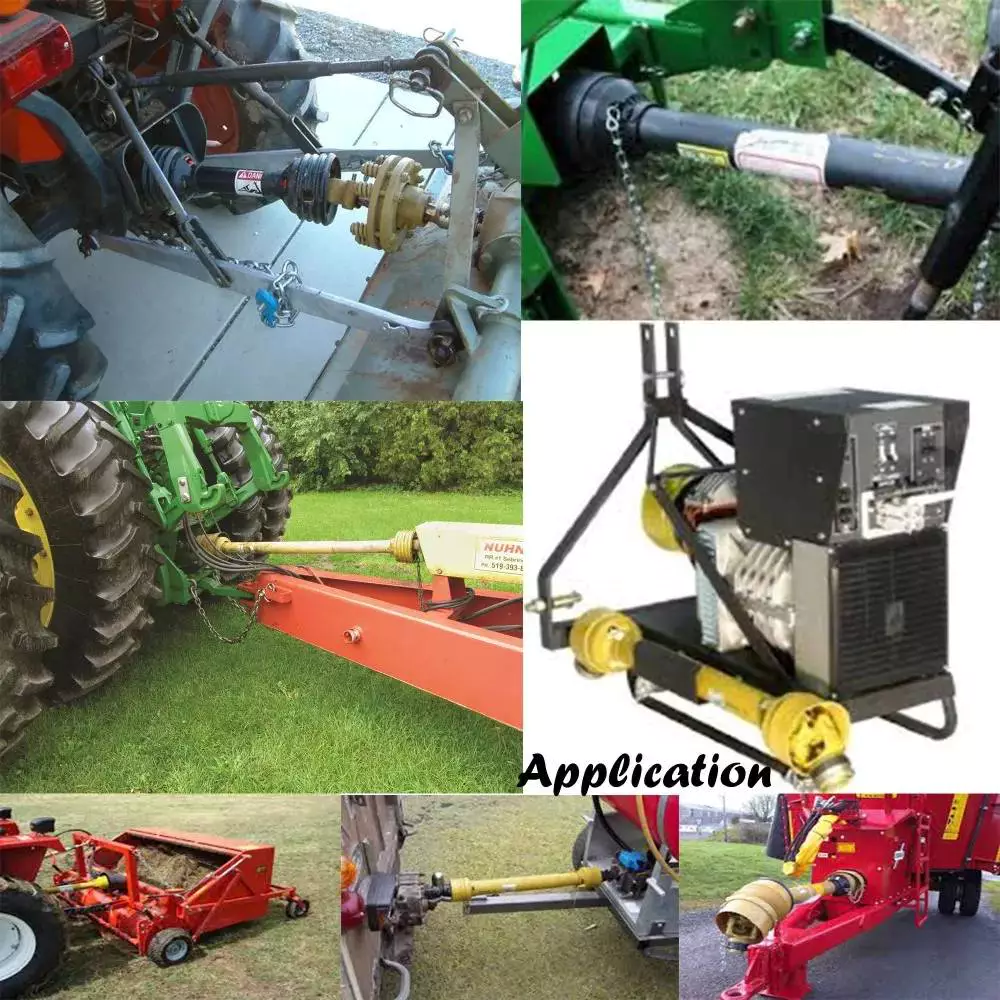
Can you provide real-world examples of farming machinery that rely on tractor PTO shafts?
Tractor power take-off (PTO) shafts are used to power a wide range of farming machinery and implements. They provide a versatile and efficient method of transmitting power from the tractor to various agricultural equipment. Here are some real-world examples of farming machinery that rely on tractor PTO shafts:
1. Rotary Mowers: Rotary mowers, commonly used for cutting grass, weeds, and vegetation, often rely on PTO shafts for power. The PTO shaft connects the mower to the tractor, enabling the blades to rotate and perform the cutting action.
2. Balers: Balers are used to compress and bale hay, straw, or other forage crops into compact bundles for storage or transportation. PTO-driven balers use the tractor’s PTO shaft to power the baling mechanism, which includes the pickup, feeding system, and bale formation components.
3. Hay Rakes: Hay rakes are used to gather and arrange hay into windrows or rows for drying. PTO-driven hay rakes utilize the tractor’s PTO shaft to power the rake’s rotating tines, which lift and arrange the hay into neat rows.
4. Silage Choppers: Silage choppers are used to chop and process silage, which is fermented and stored animal feed. PTO-driven silage choppers rely on the tractor’s PTO shaft to power the cutting mechanism, typically consisting of rotating blades or knives.
5. Seeders and Planters: Seeders and planters are used to sow seeds and plant crops in prepared soil. PTO-driven seeders and planters utilize the tractor’s PTO shaft to power the seed metering and distribution mechanism, ensuring accurate seed placement and spacing.
6. Fertilizer Spreaders: Fertilizer spreaders are used to evenly distribute fertilizers, lime, or other soil amendments across fields. PTO-driven fertilizer spreaders rely on the tractor’s PTO shaft to power the spreading mechanism, which may include spinning disks or augers.
7. Manure Spreaders: Manure spreaders are used to evenly distribute animal manure or compost onto fields as organic fertilizer. PTO-driven manure spreaders use the tractor’s PTO shaft to power the mechanisms that agitate and spread the manure during application.
8. Post Hole Diggers: Post hole diggers are used to dig holes for fence posts, tree planting, or other applications. PTO-driven post hole diggers rely on the tractor’s PTO shaft to power the auger that drills into the ground and removes soil.
9. Rotary Tillers: Rotary tillers, also known as rotavators or cultivators, are used to prepare the soil for planting by breaking up and mixing the soil. PTO-driven rotary tillers use the tractor’s PTO shaft to power the rotating tines or blades that till the soil.
10. Hay Tedders: Hay tedders are used to spread and aerate hay for faster drying. PTO-driven hay tedders rely on the tractor’s PTO shaft to power the rotating tines or paddles that lift and spread the hay.
These are just a few examples of farming machinery that rely on tractor PTO shafts. PTO-driven equipment is widely used in agriculture to enhance efficiency, productivity, and versatility in various farming operations.
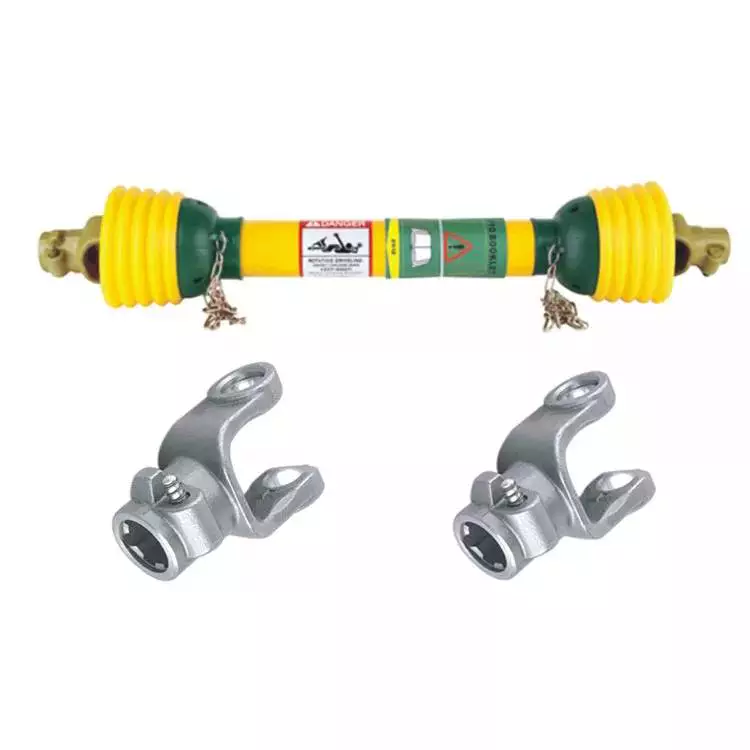
¿Cómo garantizan los ejes de toma de fuerza del tractor una distribución eficiente de la potencia manteniendo la seguridad?
Los ejes de toma de fuerza (TDF) de los tractores están diseñados para garantizar una distribución eficiente de la potencia, manteniendo la seguridad durante la operación. Estos ejes desempeñan un papel crucial en la transferencia de potencia del motor del tractor al implemento. Así es como los ejes de toma de fuerza logran esto:
- Eficiencia de transmisión de potencia: Los ejes de toma de fuerza (TDF) de los tractores están diseñados para minimizar la pérdida de potencia durante la transmisión. Se fabrican con materiales y diseños que reducen la fricción y la resistencia rotacional. Al minimizar la pérdida de potencia, los ejes de toma de fuerza maximizan la eficiencia de la transferencia de potencia, permitiendo que el implemento aproveche eficazmente la potencia generada por el motor del tractor.
- Alineación adecuada: Los ejes de la toma de fuerza (TDF) deben estar correctamente alineados entre el tractor y el implemento para garantizar una distribución eficiente de la potencia. Una desalineación puede provocar vibraciones, mayor desgaste y una menor eficiencia de la transmisión de potencia. Los ejes de la TDF de los tractores suelen incorporar acoplamientos flexibles o juntas universales que se adaptan a la desalineación angular y mantienen una transferencia de potencia fluida entre ambos componentes.
- Escudos y protecciones de seguridad: La seguridad es un aspecto fundamental del diseño de los cardanes de los tractores. Estos cardanes están equipados con protectores o protecciones de seguridad que cubren los componentes giratorios para evitar el contacto accidental. Estos protectores y protecciones actúan como barreras físicas, reduciendo el riesgo de lesiones a los operadores o transeúntes. Es fundamental garantizar que los protectores y protecciones de seguridad estén correctamente instalados y mantenidos para brindar una protección eficaz.
- Dispositivos limitadores de par: Los ejes de la toma de fuerza de los tractores suelen incorporar dispositivos limitadores de par, como pasadores de seguridad o embragues de deslizamiento. Estos dispositivos ayudan a proteger tanto al tractor como al implemento de un par excesivo. En caso de un aumento repentino del par o de un bloqueo en el implemento, el dispositivo limitador de par se desacopla o patina, evitando daños en el eje de la toma de fuerza, el tractor o el implemento. Esta característica aumenta la seguridad y evita reparaciones costosas.
- Mantenimiento adecuado: El mantenimiento regular es crucial para garantizar el funcionamiento eficiente y la seguridad de los cardanes de los tractores. Esto incluye la lubricación de las piezas móviles, la inspección de los protectores y las protecciones de seguridad, y la verificación de cualquier signo de desgaste o daño. Seguir el programa de mantenimiento recomendado por el fabricante ayuda a mantener la integridad y el rendimiento del cardán.
Al incorporar elementos de diseño como la eficiencia de la transmisión de potencia, la alineación correcta, protectores y protecciones de seguridad, limitadores de par y mantenimiento regular, los ejes de toma de fuerza de los tractores garantizan una distribución eficiente de la potencia y seguridad durante la operación. Estas características contribuyen a la productividad y confiabilidad general de los equipos agrícolas e industriales accionados por sistemas de toma de fuerza.
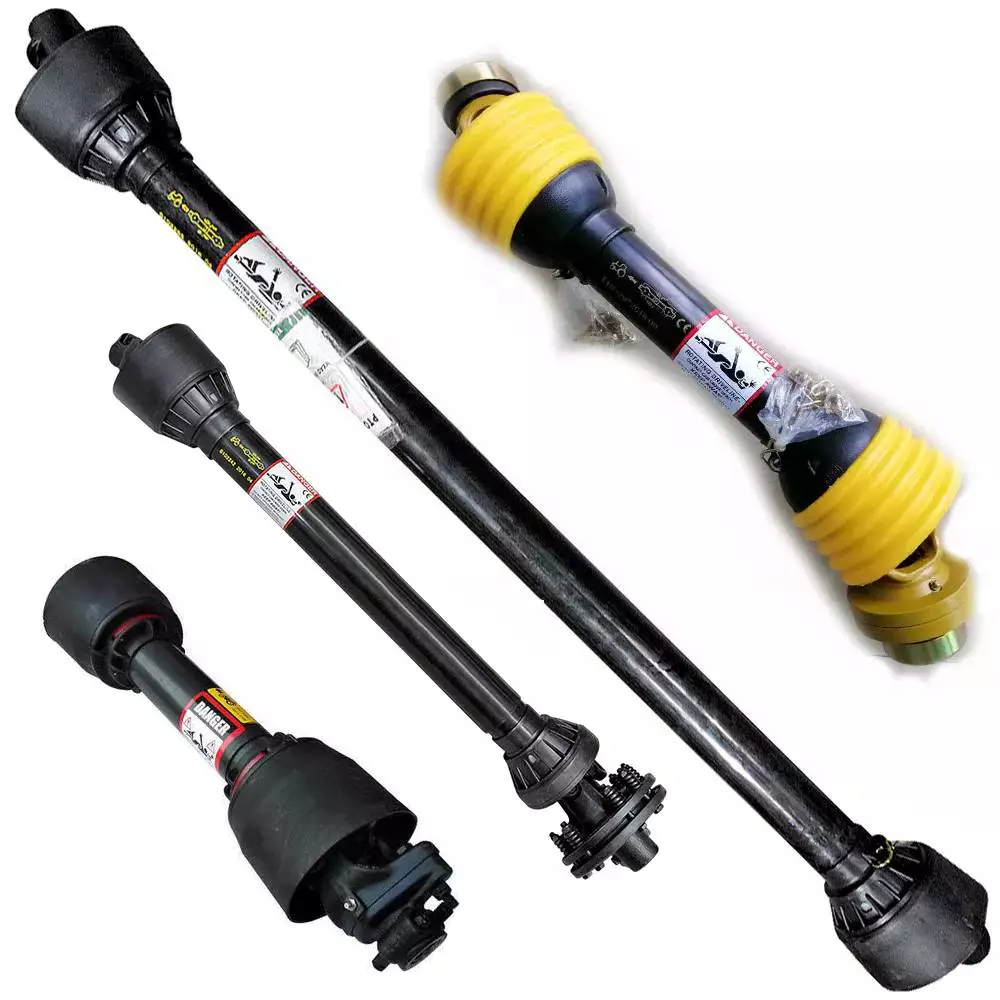
Which Types of Implements and Equipment Commonly Utilize Tractor PTO Shafts?
Tractor power take-off (PTO) shafts are widely used in conjunction with various implements and equipment in agricultural operations. These implements and equipment are designed to be powered by the rotational motion transmitted through the PTO shaft. Here are some of the commonly used types of implements and equipment that utilize tractor PTO shafts:
1. Rotary Mowers:
Rotary mowers are frequently powered by tractor PTO shafts. These mowers are used for cutting grass, weeds, and vegetation in agricultural fields, pastures, lawns, and roadside areas. The PTO shaft drives the rotary blades of the mower, enabling efficient cutting and maintenance of vegetation over large areas.
2. Tillers:
Tillers, also known as rototillers or cultivators, are implements commonly used in soil preparation. They are attached to the tractor’s PTO shaft and driven by its rotational motion. The PTO-driven tiller features rotating tines or blades that break up and aerate the soil, preparing it for planting or seeding.
3. Balers:
Balers are essential equipment in hay and forage production. They are used to gather and compress cut vegetation, such as hay or straw, into compact bales for storage or transportation. The PTO shaft powers the baler’s mechanisms, including the pickup, bale formation, and wrapping mechanisms, ensuring efficient baling operations.
4. Spreaders:
Spreaders, such as fertilizer spreaders or manure spreaders, are commonly used in agriculture to evenly distribute materials over a field. These implements are connected to the tractor’s PTO shaft, which drives the spreading mechanism. The rotational motion from the PTO shaft ensures the proper distribution of fertilizers, seeds, or other granular materials across the field.
5. Seeders and Planters:
Seeders and planters are implements used for sowing seeds and planting crops. They utilize the tractor’s PTO shaft to power the seed metering and planting mechanisms. The PTO-driven seeder or planter ensures accurate seed placement and spacing, facilitating efficient crop establishment and uniform plant growth.
6. Irrigation Pumps:
Irrigation pumps play a crucial role in agricultural irrigation systems. They are often connected to the tractor’s PTO shaft to provide the necessary power for pumping water from a water source, such as a well or reservoir, to irrigate fields or crops. The PTO-driven pump ensures a reliable and efficient water supply for irrigation purposes.
7. Wood Chippers:
Wood chippers are used to process tree branches, logs, and other woody materials into wood chips or mulch. Tractor PTO shafts power the chipping mechanism, which involves feeding the wood into rotating blades that chip the material into smaller pieces. PTO-driven wood chippers are commonly used in forestry operations, landscaping, and biomass production.
8. Post Hole Diggers:
Post hole diggers are implements used for digging holes in the ground, typically for installing fence posts or planting trees. The PTO shaft provides the rotational power required to operate the digging auger. The auger is driven into the ground, creating a hole of the desired diameter and depth.
9. Hay Rakes and Tedders:
Hay rakes and tedders are implements used in haymaking operations. They are connected to the tractor’s PTO shaft to power the rotating rake or tedder mechanisms. These implements help fluff, spread, and turn the cut hay, ensuring proper drying and curing before baling.
10. Grain Harvesters:
Grain harvesters, such as combine harvesters or forage harvesters, are large machines used for harvesting grain crops or forage crops. Tractor PTO shafts are utilized to power various components of the harvester, including the cutting head, threshing mechanism, and grain or forage collection systems. The PTO-driven harvesters streamline the harvesting process and improve efficiency.
These are just a few examples of the many implements and equipment that commonly utilize tractor PTO shafts. The versatility of PTO shafts allows for the efficient powering of a wide range of agricultural machinery, contributing to the productivity and effectiveness of farming operations.


editor by CX 2023-11-18