Descripción del Producto
Descripción del Producto
Descripción del Producto
Parámetros básicos y dimensiones principales del eje cardán SWC BH
El eje cardán se utiliza ampliamente en laminadoras, punzonadoras, enderezadoras, trituradoras, sistemas de propulsión naval, equipos para la fabricación de papel, maquinaria común, equipos de bombeo de agua, bancos de pruebas y otras aplicaciones mecánicas.
Ventaja:
1. Bajos costos de ciclo de vida y larga vida útil;
2. Aumentar la productividad;
3. Soluciones profesionales e innovadoras;
4. Reducir las emisiones de dióxido de carbono y proteger el medio ambiente;
5. Alta capacidad de torsión incluso con grandes ángulos de deflexión;
6. Fácil de mover y de funcionamiento suave;
Fotos detalladas
Parámetros del producto
| Modelo | Tennesse kN • m |
T. |
pag (.) |
LS mm |
Lmin | Tamaño mm |
1 kg. m2 | metro kg |
|||||||||||
| Di js11 |
d2 H7 |
Da | Lm | Dakota del Norte | k | t | b h9 |
gramo | Lmin | 100 mm | Lmin | 100 mm | |||||||
| SWC58BH | 58 | 0.15 | 0.075 | ≤22 | 35 | 325 | 47 | 30 | 38 | 35 | 4-5 | 3.5 | 1.5 | – | – | – | – | 2.2 | – |
| SWC65BH | 65 | 0.25 | 0.125 | ≤22 | 40 | 360 | 52 | 35 | 42 | 46 | 4-6 | 4.5 | 1.7 | – | – | – | – | 3.0 | – |
| SWC75BH | 75 | 0.50 | 0.25 | ≤22 | 40 | 395 | 62 | 42 | 50 | 58 | 6-6 | 5.5 | 2.0 | – | – | – | – | 5.0 | – |
| SWC90BH | 90 | 1.0 | 0.50 | ≤22 | 45 | 435 | 74.5 | 47 | 54 | 58 | 4-8 | 6.0 | 2.5 | – | – | – | – | 6.6 | – |
| SWC100BH | 100 | 1.5 | 0.75 | ≤25 | 55 | 390 | 84 | 57 | 60 | 58 | 6-9 | 7 | 2.5 | – | – | 0.0044 | 0.00019 | 6.1 | 0.35 |
| SWC120BH | 120 | 2.5 | 1.25 | ≤25 | 80 | 485 | 102 | 75 | 70 | 68 | 8-11 | 8 | 2.5 | – | – | 0.5719 | 0.00044 | 10.8 | 0.55 |
| SWC150BH | 150 | 5 | 2.5 | ≤25 | 80 | 590 | 13.0 | 90 | 89 | 80 | 8-13 | 10 | 3.0 | – | – | 0.0423 | 0.00157 | 24.5 | 0.85 |
| SWC160BH | 160 | 10 | 5 | ≤25 | 80 | 660 | 137 | 100 | 95 | 110 | 8-15 | 15 | 3.0 | 20 | 12 | 0.1450 | 0.0060 | 68 | 1.72 |
| SWC180BH | 180 | 20 | 10 | ≤25 | 100 | 810 | 155 | 105 | 114 | 130 | 8-17 | 17 | 5.0 | 24 | 14 | 0.1750 | 0.0070 | 70 | 2.8 |
| SWC200BH | 200 | 32 | 16 | ≤15 | 110 | 860 | 170 | 120 | 127 | 135 | 8-17 | 19 | 5.0 | 28 | 16 | 0.3100 | 0.0130 | 86 | 3.6 |
| SWC225BH | 225 | 40 | 20 | ≤15 | 140 | 920 | 196 | 135 | 152 | 120 | 8-17 | 20 | 5.0 | 32 | 9.0 | 0.5380 | 0.5714 | 122 | 4.9 |
| SWC250BH | 250 | 63 | 31.5 | ≤15 | 140 | 1035 | 218 | 150 | 168 | 140 | 8-19 | 25 | 6.0 | 40 | 12.5 | 0.9660 | 0.5717 | 172 | 5.3 |
| SWC285BH | 285 | 90 | 45 | ≤15 | 140 | 1190 | 245 | 170 | 194 | 160 | 8-21 | 27 | 7.0 | 40 | 15.0 | 2.0110 | 0.571 | 263 | 6.3 |
| SWC315BH | 315 | 125 | 63 | ≤15 | 140 | 1315 | 280 | 185 | 219 | 180 | 10-23 | 32 | 8.0 | 40 | 15.0 | 3.6050 | 0.571 | 382 | 8.0 |
| SWC350BH | 350 | 180 | 90 | ≤15 | 150 | 1410 | 310 | 210 | 267 | 194 | 10-23 | 35 | 8.0 | 50 | 16.0 | 7.571 | 0.2219 | 582 | 15.0 |
| SWC390BH | 390 | 250 | 125 | ≤15 | 170 | 1590 | 345 | 235 | 267 | 215 | 10-25 | 40 | 8.0 | 70 | 18.0 | 12.164 | 0.2219 | 738 | 15.0 |
| SWC440BH | 440 | 355 | 180 | ≤15 | 190 | 1875 | 390 | 255 | 325 | 260 | 16-28 | 42 | 10 | 80 | 20.0 | 21.420 | 0.4744 | 1190 | 21.7 |
| SWC490BH | 490 | 500 | 250 | ≤15 | 190 | 1985 | 435 | 275 | 325 | 270 | 16-31 | 47 | 12 | 90 | 22.5 | 32.860 | 0.4744 | 1452 | 21.7 |
| SWC550BH | 550 | 710 | 355 | ≤15 | 240 | 2300 | 492 | 320 | 426 | 305 | 16-31 | 50 | 12 | 100 | 22.5 | 68.920 | 1.3570 | 2380 | 34 |
Embalaje y envío
Perfil de la empresa
HangZhou CHINAMFG Machinery Manufacturing Co., Ltd. es una empresa de alta tecnología especializada en el diseño y la fabricación de diversos tipos de acoplamientos. Nuestra empresa cuenta con 86 empleados, entre ellos 2 ingenieros superiores y no menos de 20 profesionales en diseño y fabricación mecánica, tratamiento térmico, soldadura y otras áreas.
Proceso avanzado y racional, con completos medios de detección. Nuestra empresa incorpora activamente tecnología y equipos extranjeros de vanguardia, aprovechando al máximo las ventajas y fomentando la investigación e innovación. Nos regimos por altos estándares de calidad y operamos rigurosamente conforme al sistema de certificación de calidad ISO 9000.
Nuestra empresa ofrece una amplia variedad de productos de alta calidad a precios razonables. Nos regimos por el principio de "calidad primero, servicio primero, mejora continua e innovación para satisfacer a nuestros clientes" en nuestra gestión, y nuestro objetivo de calidad es "cero defectos, cero quejas".
Nuestros servicios
1. Servicios de diseño
Nuestro equipo de diseño cuenta con experiencia en ejes cardán, tanto en el diseño como en el desarrollo de productos. Si necesita ayuda con su nuevo producto o desea realizar mejoras, estamos a su disposición para brindarle nuestro apoyo.
2. Servicios de productos
Materias primas → Corte → Forjado → Mecanizado en bruto → Granallado → Tratamiento térmico → Pruebas → Confección → Limpieza → Ensamblaje → Embalaje → Envío
3. Procedimiento de muestras
Podríamos desarrollar la muestra de acuerdo con sus requisitos y modificarla constantemente para satisfacer sus necesidades.
4. Investigación y desarrollo
Solemos investigar las nuevas necesidades del mercado y desarrollar nuevos modelos cuando aparecen nuevos coches en el mercado.
5. Control de calidad
Cada paso debe ser sometido a una prueba específica por parte de personal profesional de acuerdo con las normas ISO9001 y TS16949.
Preguntas frecuentes
P 1: ¿Son ustedes una empresa comercial o un fabricante?
A: Somos un fabricante profesional especializado en la fabricación
varias series de acoplamientos.
P 2: ¿Pueden fabricar productos OEM?
Sí, podemos. Podemos realizar servicios OEM y ODM para todos los clientes con diseños personalizados en formato PDF o AI.
P 3: ¿Cuánto tarda la entrega?
Generalmente, el plazo de entrega es de 20 a 30 días si la mercancía no está en stock. Depende de la cantidad.
P 4: ¿Ofrecen muestras? ¿Son gratuitas o tienen costo adicional?
Sí, podemos ofrecerle la muestra, pero no es gratuita. De hecho, tenemos una excelente política de precios: al realizar un pedido al por mayor, el costo de la muestra se descontará.
P 5: ¿Cuánto dura la garantía?
R: Nuestra garantía es de 12 meses en circunstancias normales.
P 6: ¿Cuál es la cantidad mínima de pedido (MOQ)?
R: Normalmente nuestro pedido mínimo es de 1 unidad.
P 7: ¿Disponen de procedimientos de inspección para el acoplamiento?
A:100% autoinspección antes del embalaje.
P 8: ¿Puedo visitar su fábrica antes de realizar el pedido?
R: Claro, le invitamos a visitar nuestra fábrica.
P 9: ¿Cuál es su pago?
A:1) T/T.
♦Contáctenos
Web: huadingcoupling
Dirección: Calle Hangzhou n.º 11, Parque Chengnan, Ciudad de Hangzhou, Provincia de Zhejiang, China
| Condición: | Nuevo |
|---|---|
| Color: | según sea necesario |
| Proceso de dar un título: | ISO |
| Tipo: | Junta universal |
| Material: | Acero al carbono o según se requiera |
| Tamaño: | Tamaño estándar |
| Personalización: |
Disponible
| Solicitud personalizada |
|---|
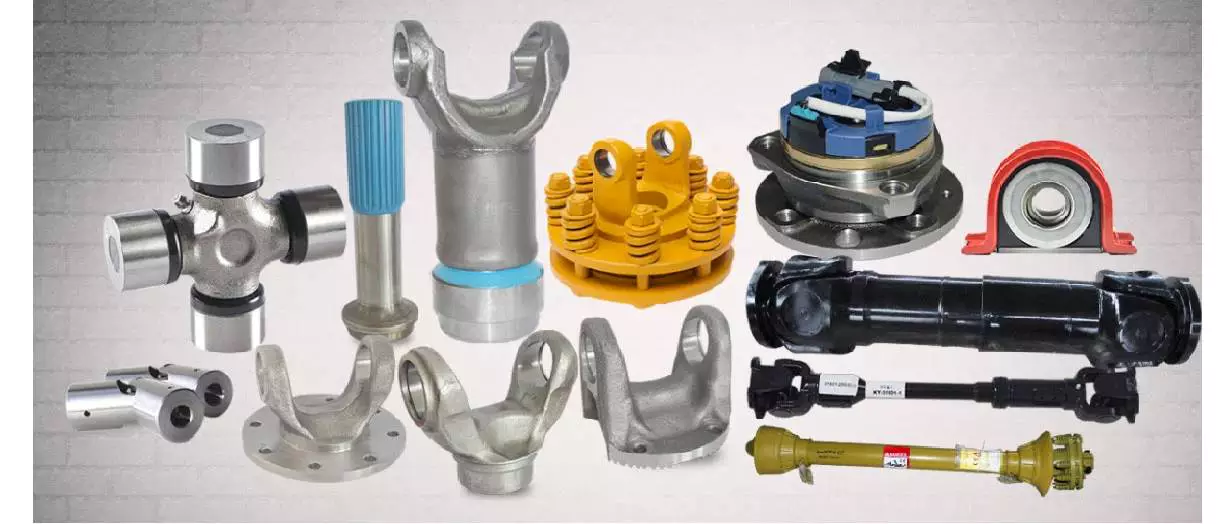
Can tractor PTO shafts be customized for specific implement or machinery requirements?
Yes, tractor power take-off (PTO) shafts can be customized to meet specific implement or machinery requirements. Customization allows for the optimal integration of PTO shafts with different agricultural implements and machinery. Here’s a detailed explanation:
1. Length and Size: PTO shafts can be customized in terms of length and size to suit specific requirements. Different implements or machinery may have varying distance requirements between the tractor’s PTO output and the input shaft of the implement. Customizing the length ensures proper alignment and a secure connection. Additionally, the size of the PTO shaft, such as the diameter, can be adjusted to match the power and torque requirements of the implement.
2. Attachment Methods: PTO shafts can be customized to accommodate different attachment methods required by specific implements. The attachment method refers to how the PTO shaft connects to the implement’s input shaft. Common attachment methods include a shear pin, a quick-release collar, or a splined connection. Customization allows manufacturers to provide the appropriate attachment method based on the implement’s design and requirements.
3. Shaft Configurations: PTO shafts can have different configurations to suit specific implement or machinery designs. For example, some implements may require a straight shaft, while others may need a telescopic or sliding shaft to accommodate variable distance requirements during operation. Customizing the shaft configuration ensures a proper fit and allows for smooth operation without compromising safety.
4. Protection and Shielding: Customization of PTO shafts can include additional protection and shielding features. Agricultural tasks often involve debris and potential hazards that can damage the PTO shaft. Manufacturers can customize the shaft by adding protective guards, such as metal or polymer shields, to prevent entanglement or contact with external objects. This customization enhances safety and prolongs the lifespan of the PTO shaft.
5. Specific Industry Standards: Some industries or applications may have specific standards or regulations for PTO shafts. Manufacturers can customize PTO shafts to meet these specific industry requirements, ensuring compliance with safety standards and compatibility with machinery used in those industries.
It’s important to note that the customization of PTO shafts is typically carried out by the manufacturers or specialized suppliers. They have the expertise and knowledge to design and manufacture customized PTO shafts that meet the required specifications and standards.
In summary, tractor PTO shafts can be customized to accommodate specific implement or machinery requirements. Customization options include adjusting the length and size, adapting attachment methods, configuring the shaft design, adding protection and shielding, and meeting specific industry standards. Customized PTO shafts ensure optimal integration and performance, enhancing the overall efficiency and safety of agricultural operations.
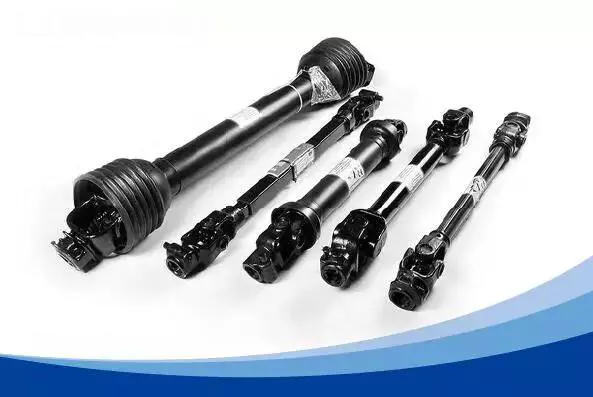
¿Cuáles son los signos comunes de desgaste o daño en los componentes del eje de la toma de fuerza del tractor?
Varias señales comunes indican desgaste o daños en los componentes del eje de la toma de fuerza del tractor. Estas señales pueden ayudar a identificar posibles problemas y a realizar las reparaciones o sustituciones necesarias. A continuación, se presentan algunas de las señales más comunes a tener en cuenta:
1. Ruido y vibración: El ruido y la vibración excesivos durante el funcionamiento de la toma de fuerza pueden indicar componentes desgastados o dañados. Los ruidos inusuales de traqueteo, rechinido o golpeteo, junto con la vibración excesiva, pueden sugerir problemas como juntas universales desalineadas o desgastadas, cojinetes dañados o estrías del eje desgastadas.
2. Fuga de grasa: La fuga de grasa del eje de la toma de fuerza (TDF) es señal de un posible problema. Puede indicar desgaste o daños en los sellos, lubricación inadecuada o daños en los sellos de los cojinetes. La fuga de grasa debe solucionarse de inmediato para evitar daños mayores a los componentes.
3. Dificultad para involucrarse o desvincularse: Si el acoplamiento o desacoplamiento de la toma de fuerza (TDF) se vuelve difícil o poco fiable, podría indicar desgaste o daños en los discos de embrague, las estrías o los mecanismos de bloqueo. La dificultad para acoplar o desacoplar la TDF puede afectar la transmisión de potencia y requerir atención inmediata.
4. Juego excesivo del eje: Un juego o movimiento excesivo en el eje de la toma de fuerza puede indicar desgaste o daños en las juntas universales o las estrías. Si se observa holgura o juego al girar el eje manualmente, esto sugiere que los componentes podrían necesitar inspección y, posiblemente, reemplazo.
5. Disminución de la potencia de salida: Una disminución notable en la potencia o un rendimiento reducido durante el funcionamiento de la toma de fuerza (TDF) puede indicar problemas con el eje de la TDF. Componentes desgastados o dañados, como embragues que patinan, estrías desgastadas o engranajes dañados, pueden provocar pérdida de potencia y una menor eficiencia.
6. Daños o desgaste visibles: La inspección visual del eje de la toma de fuerza (TDF) puede revelar signos de daño o desgaste. Busque grietas, dobleces, abolladuras u otros daños visibles en el eje o en los componentes de protección. Además, verifique si hay signos de desgaste en las estrías, horquillas o juntas universales, como marcas de desgaste excesivas, corrosión o piezas faltantes.
No se deben ignorar estas señales comunes de desgaste o daños en los componentes del eje de la toma de fuerza del tractor. Si se observa alguna de estas señales, se recomienda que un técnico cualificado inspeccione el eje de la toma de fuerza o, si es necesario, que lo reemplace. Tomar medidas preventivas puede evitar daños mayores, garantizar un funcionamiento seguro y mantener el rendimiento óptimo del sistema de toma de fuerza.
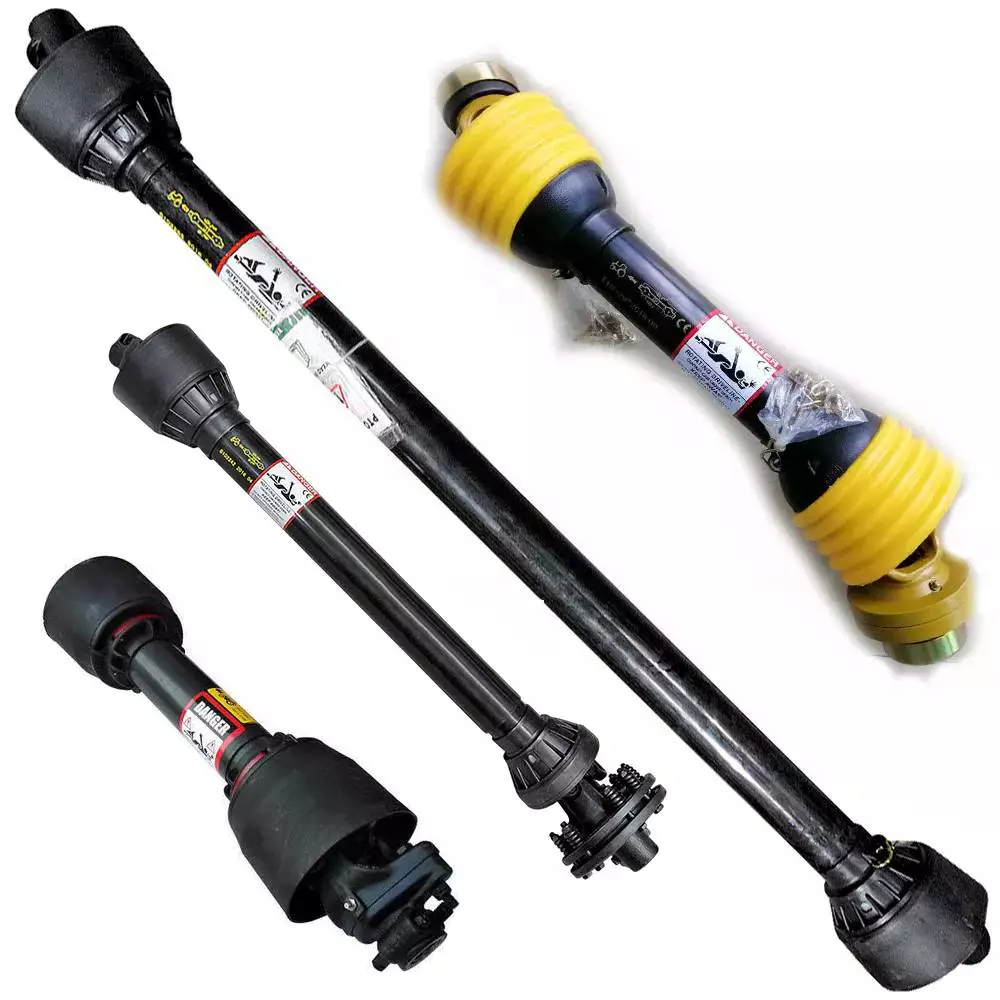
Which Types of Implements and Equipment Commonly Utilize Tractor PTO Shafts?
Tractor power take-off (PTO) shafts are widely used in conjunction with various implements and equipment in agricultural operations. These implements and equipment are designed to be powered by the rotational motion transmitted through the PTO shaft. Here are some of the commonly used types of implements and equipment that utilize tractor PTO shafts:
1. Rotary Mowers:
Rotary mowers are frequently powered by tractor PTO shafts. These mowers are used for cutting grass, weeds, and vegetation in agricultural fields, pastures, lawns, and roadside areas. The PTO shaft drives the rotary blades of the mower, enabling efficient cutting and maintenance of vegetation over large areas.
2. Tillers:
Tillers, also known as rototillers or cultivators, are implements commonly used in soil preparation. They are attached to the tractor’s PTO shaft and driven by its rotational motion. The PTO-driven tiller features rotating tines or blades that break up and aerate the soil, preparing it for planting or seeding.
3. Balers:
Balers are essential equipment in hay and forage production. They are used to gather and compress cut vegetation, such as hay or straw, into compact bales for storage or transportation. The PTO shaft powers the baler’s mechanisms, including the pickup, bale formation, and wrapping mechanisms, ensuring efficient baling operations.
4. Spreaders:
Spreaders, such as fertilizer spreaders or manure spreaders, are commonly used in agriculture to evenly distribute materials over a field. These implements are connected to the tractor’s PTO shaft, which drives the spreading mechanism. The rotational motion from the PTO shaft ensures the proper distribution of fertilizers, seeds, or other granular materials across the field.
5. Seeders and Planters:
Seeders and planters are implements used for sowing seeds and planting crops. They utilize the tractor’s PTO shaft to power the seed metering and planting mechanisms. The PTO-driven seeder or planter ensures accurate seed placement and spacing, facilitating efficient crop establishment and uniform plant growth.
6. Irrigation Pumps:
Irrigation pumps play a crucial role in agricultural irrigation systems. They are often connected to the tractor’s PTO shaft to provide the necessary power for pumping water from a water source, such as a well or reservoir, to irrigate fields or crops. The PTO-driven pump ensures a reliable and efficient water supply for irrigation purposes.
7. Wood Chippers:
Wood chippers are used to process tree branches, logs, and other woody materials into wood chips or mulch. Tractor PTO shafts power the chipping mechanism, which involves feeding the wood into rotating blades that chip the material into smaller pieces. PTO-driven wood chippers are commonly used in forestry operations, landscaping, and biomass production.
8. Post Hole Diggers:
Post hole diggers are implements used for digging holes in the ground, typically for installing fence posts or planting trees. The PTO shaft provides the rotational power required to operate the digging auger. The auger is driven into the ground, creating a hole of the desired diameter and depth.
9. Hay Rakes and Tedders:
Hay rakes and tedders are implements used in haymaking operations. They are connected to the tractor’s PTO shaft to power the rotating rake or tedder mechanisms. These implements help fluff, spread, and turn the cut hay, ensuring proper drying and curing before baling.
10. Grain Harvesters:
Grain harvesters, such as combine harvesters or forage harvesters, are large machines used for harvesting grain crops or forage crops. Tractor PTO shafts are utilized to power various components of the harvester, including the cutting head, threshing mechanism, and grain or forage collection systems. The PTO-driven harvesters streamline the harvesting process and improve efficiency.
These are just a few examples of the many implements and equipment that commonly utilize tractor PTO shafts. The versatility of PTO shafts allows for the efficient powering of a wide range of agricultural machinery, contributing to the productivity and effectiveness of farming operations.


Editor por CX 17/11/2023