Descripción del Producto
Shacman Delong Axle Cross Joint Pto Drive Shaft for Power Transmission DZ9114315147
| DZ9114315147 | L=1470MM |
| DZ9114315126 | L=1260MM |
| DZ9114315128 | L=1280MM |
| DZ9114315156 | L=1560MM |
| DZ9114315160 | L=1600MM |
| DZ9114315164 | L=1640MM |
Product advantages & features
(1) Thickened shaft tube, thickened universal joint, impact toughness and fatigue resistance.
(2) Machining by machining center, standard size and stable quality.
(3) Single inspection out of the warehouse to ensure 100% qualified products out of the warehouse.
(4) Adjust the dynamic balance test when leaving the warehouse to ensure its loading stability.
Our inventory
More Products
| Truck Model | Sinotruk, Shacman, CHINAMFG Auman, CHINAMFG Xihu (West Lake) Dis., Xihu (West Lake) Dis.feng, Xihu (West Lake) Dis.feng Liuqi Balong, North BENZ( BEIBEN), C&C, JAC, etc. | |
| Product catalogue | Axle | Wheel Assembly |
| Differential Assembly | ||
| Main Reducer Assembly | ||
| Inner Ring Gear& Bracket | ||
| Basin Angle Gear/ Bevel Gear | ||
| Axle Shaft/ Half Shaft & Through Shaft | ||
| Axle Housing& Axle Assembly | ||
| Steering knuckle & Front Axle | ||
| Gear | ||
| Brake Drum& Wheel Hub | ||
| Flange | ||
| Bearing | ||
| Main Reducer Housing | ||
| Oil Seal Seat | ||
| Nut& Shim Series | ||
| Brake Backing Plate | ||
| Chassis Support Products | Leaf Spring Bracket | |
| Drop Arm Series | ||
| Bracket Series | ||
| Leaf Spring Shackle Series | ||
| Balanced Suspension Series | Balance Shaft Assembly | |
| Balance Shaft Housing | ||
| Axle Spring Seat | ||
| Thrust Rod | ||
| Balance Shaft Parts | ||
| Shock Absorber Series | Shock Absorber | |
| Shock Absorbing Airbag | ||
| Steering System | Power Steering Pump | |
| Power Steering Gear | ||
| Rubber Products | Oil Seal | |
| Rubber Support | ||
| Thrust Rod Rubber Core | ||
| Truck Belt | ||
| Engine support | ||
| Other | ||
| Clutch Series | Clutch Pressure Plate | |
| Clutch Disc | ||
| Flywheel Assembly | ||
| Flywheel Ring Gear | ||
| Adjusting Arm Series | ||
Embalaje y envío
Preguntas frecuentes
Q1. How about price of products?
The price is negotiable.It can be changed according to your quantity or package. When you are making an inquiry, please let us know the quantity you want.
Please provide the exact or approximate quantity, packing details, destination port or special requirements, so we could give you the price accordingly.
Q2. What is the products delivery time?
Generally, it will take 3 to 10 days after receiving your advance payment. The specific delivery time depends on the items and the quantity of your order.
Q3.Do you test all your goods before delivery?
Yes,we have 100% test before delivery.
Q4.What is your terms of payment?
By TT or We’ll show you the photos of the products and packages before you pay the balance.
Q5. Do you accept third party inspection?
Yes,we do.
Q6. Are you a factory or trading company?
We are a factory integrating research, development, production and sales.
Certificaciones
|
Costo de envío:
Flete estimado por unidad. |
Por negociar |
|---|
| Material: | Acero |
|---|---|
| Carga: | Eje de transmisión |
| Rigidez y flexibilidad: | Eje flexible |
| Muestras: |
US$ 175/Piece
1 pieza (pedido mínimo) | Solicitar muestra |
|---|
| Personalización: |
Disponible
| Solicitud personalizada |
|---|
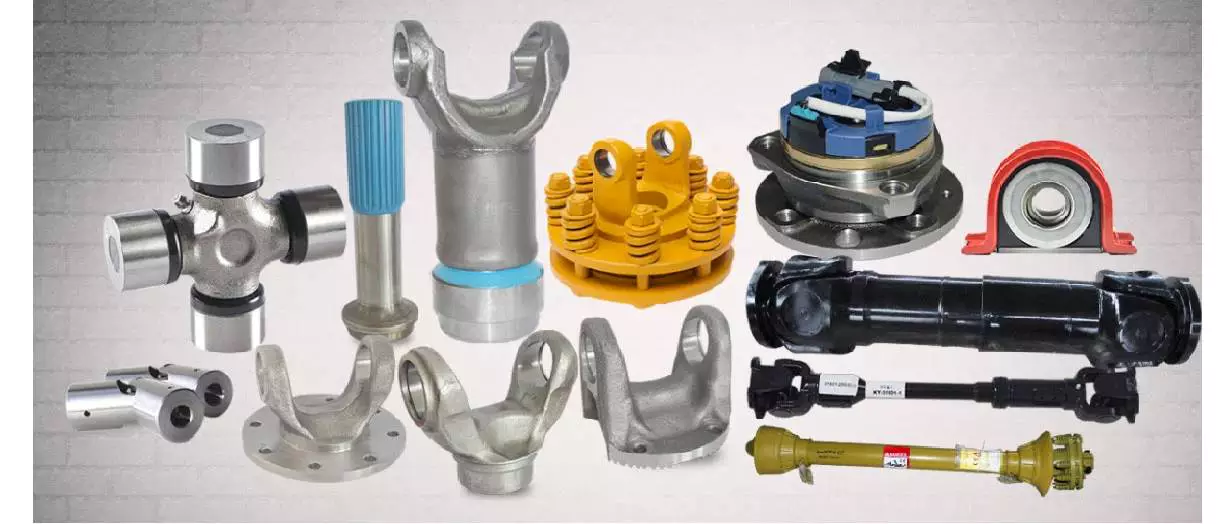
Can tractor PTO shafts be customized for specific implement or machinery requirements?
Yes, tractor power take-off (PTO) shafts can be customized to meet specific implement or machinery requirements. Customization allows for the optimal integration of PTO shafts with different agricultural implements and machinery. Here’s a detailed explanation:
1. Length and Size: PTO shafts can be customized in terms of length and size to suit specific requirements. Different implements or machinery may have varying distance requirements between the tractor’s PTO output and the input shaft of the implement. Customizing the length ensures proper alignment and a secure connection. Additionally, the size of the PTO shaft, such as the diameter, can be adjusted to match the power and torque requirements of the implement.
2. Attachment Methods: PTO shafts can be customized to accommodate different attachment methods required by specific implements. The attachment method refers to how the PTO shaft connects to the implement’s input shaft. Common attachment methods include a shear pin, a quick-release collar, or a splined connection. Customization allows manufacturers to provide the appropriate attachment method based on the implement’s design and requirements.
3. Shaft Configurations: PTO shafts can have different configurations to suit specific implement or machinery designs. For example, some implements may require a straight shaft, while others may need a telescopic or sliding shaft to accommodate variable distance requirements during operation. Customizing the shaft configuration ensures a proper fit and allows for smooth operation without compromising safety.
4. Protection and Shielding: Customization of PTO shafts can include additional protection and shielding features. Agricultural tasks often involve debris and potential hazards that can damage the PTO shaft. Manufacturers can customize the shaft by adding protective guards, such as metal or polymer shields, to prevent entanglement or contact with external objects. This customization enhances safety and prolongs the lifespan of the PTO shaft.
5. Specific Industry Standards: Some industries or applications may have specific standards or regulations for PTO shafts. Manufacturers can customize PTO shafts to meet these specific industry requirements, ensuring compliance with safety standards and compatibility with machinery used in those industries.
It’s important to note that the customization of PTO shafts is typically carried out by the manufacturers or specialized suppliers. They have the expertise and knowledge to design and manufacture customized PTO shafts that meet the required specifications and standards.
In summary, tractor PTO shafts can be customized to accommodate specific implement or machinery requirements. Customization options include adjusting the length and size, adapting attachment methods, configuring the shaft design, adding protection and shielding, and meeting specific industry standards. Customized PTO shafts ensure optimal integration and performance, enhancing the overall efficiency and safety of agricultural operations.
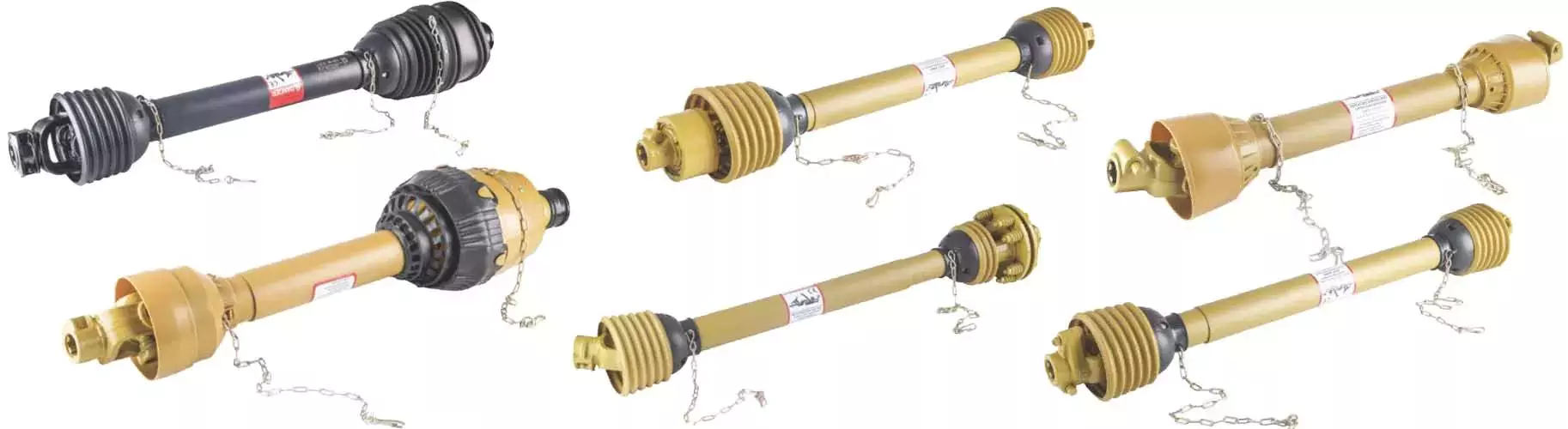
¿Se pueden adaptar los ejes de toma de fuerza del tractor para su uso en diferentes tipos de equipos agrícolas?
Los ejes de toma de fuerza de los tractores suelen poder adaptarse a diferentes tipos de maquinaria agrícola, siempre que se tengan en cuenta ciertas consideraciones. A continuación, se ofrece una explicación detallada:
1. Compatibilidad del eje de toma de fuerza: La primera consideración es asegurar la compatibilidad entre el cardán del tractor y el equipo agrícola. Esto incluye la compatibilidad con el tipo, tamaño y velocidad de rotación del cardán. Dependiendo del diseño y la demanda de potencia del equipo, podrían requerirse diferentes tipos de cardán, como cardán estándar, cardán de ángulo amplio o cardán de velocidad constante (CV).
2. Longitud y alineación del eje de la toma de fuerza: También deben considerarse los requisitos de longitud y alineación entre el tractor y el equipo. En algunos casos, puede ser necesario ajustar o reemplazar el eje de la toma de fuerza por uno de longitud diferente para asegurar la alineación y el acoplamiento correctos entre el eje de salida de la toma de fuerza del tractor y el eje de entrada del equipo.
3. Implementar la conexión PTO: Es fundamental considerar el método específico de conexión de la TDF que utiliza la maquinaria agrícola. Algunos equipos pueden tener un mecanismo de conexión de la TDF diferente, como un tamaño de estría diferente o un método de fijación distinto. Adaptar el eje de la TDF puede implicar el uso de adaptadores, acoplamientos u otros dispositivos de conexión adecuados para garantizar un ajuste seguro y correcto.
4. Requisitos de energía: La potencia requerida por la maquinaria agrícola debe ser igual o inferior a la potencia nominal de la toma de fuerza del tractor. Es fundamental garantizar que la toma de fuerza pueda satisfacer la demanda de potencia de la maquinaria sin exceder su capacidad nominal. De ser necesario, se podría requerir una toma de fuerza de mayor potencia para maquinaria más exigente.
5. Consideraciones adicionales: Dependiendo del equipo específico y sus características, puede haber consideraciones adicionales para adaptar el cardán. Por ejemplo, algunos equipos pueden requerir características de seguridad adicionales, como blindaje o protección, para garantizar la seguridad del operador. Es importante evaluar y abordar cualquier requisito adicional durante el proceso de adaptación.
Cabe destacar que, si bien las tomas de fuerza suelen adaptarse a diferentes equipos agrícolas, en algunos casos pueden existir limitaciones o problemas de compatibilidad. Se recomienda consultar al fabricante del equipo o a un experto cualificado para garantizar la correcta adaptación y compatibilidad entre la toma de fuerza del tractor y el equipo agrícola específico.
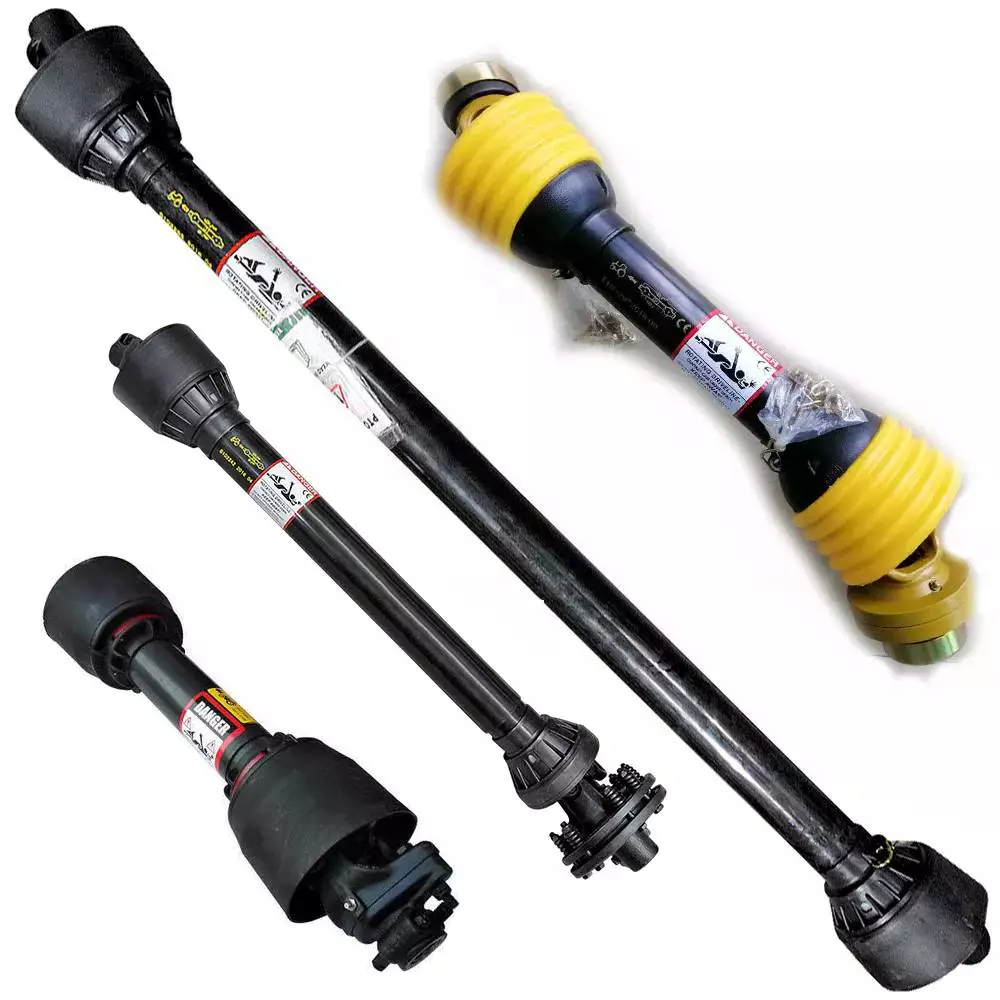
Which Types of Implements and Equipment Commonly Utilize Tractor PTO Shafts?
Tractor power take-off (PTO) shafts are widely used in conjunction with various implements and equipment in agricultural operations. These implements and equipment are designed to be powered by the rotational motion transmitted through the PTO shaft. Here are some of the commonly used types of implements and equipment that utilize tractor PTO shafts:
1. Rotary Mowers:
Rotary mowers are frequently powered by tractor PTO shafts. These mowers are used for cutting grass, weeds, and vegetation in agricultural fields, pastures, lawns, and roadside areas. The PTO shaft drives the rotary blades of the mower, enabling efficient cutting and maintenance of vegetation over large areas.
2. Tillers:
Tillers, also known as rototillers or cultivators, are implements commonly used in soil preparation. They are attached to the tractor’s PTO shaft and driven by its rotational motion. The PTO-driven tiller features rotating tines or blades that break up and aerate the soil, preparing it for planting or seeding.
3. Balers:
Balers are essential equipment in hay and forage production. They are used to gather and compress cut vegetation, such as hay or straw, into compact bales for storage or transportation. The PTO shaft powers the baler’s mechanisms, including the pickup, bale formation, and wrapping mechanisms, ensuring efficient baling operations.
4. Spreaders:
Spreaders, such as fertilizer spreaders or manure spreaders, are commonly used in agriculture to evenly distribute materials over a field. These implements are connected to the tractor’s PTO shaft, which drives the spreading mechanism. The rotational motion from the PTO shaft ensures the proper distribution of fertilizers, seeds, or other granular materials across the field.
5. Seeders and Planters:
Seeders and planters are implements used for sowing seeds and planting crops. They utilize the tractor’s PTO shaft to power the seed metering and planting mechanisms. The PTO-driven seeder or planter ensures accurate seed placement and spacing, facilitating efficient crop establishment and uniform plant growth.
6. Irrigation Pumps:
Irrigation pumps play a crucial role in agricultural irrigation systems. They are often connected to the tractor’s PTO shaft to provide the necessary power for pumping water from a water source, such as a well or reservoir, to irrigate fields or crops. The PTO-driven pump ensures a reliable and efficient water supply for irrigation purposes.
7. Wood Chippers:
Wood chippers are used to process tree branches, logs, and other woody materials into wood chips or mulch. Tractor PTO shafts power the chipping mechanism, which involves feeding the wood into rotating blades that chip the material into smaller pieces. PTO-driven wood chippers are commonly used in forestry operations, landscaping, and biomass production.
8. Post Hole Diggers:
Post hole diggers are implements used for digging holes in the ground, typically for installing fence posts or planting trees. The PTO shaft provides the rotational power required to operate the digging auger. The auger is driven into the ground, creating a hole of the desired diameter and depth.
9. Hay Rakes and Tedders:
Hay rakes and tedders are implements used in haymaking operations. They are connected to the tractor’s PTO shaft to power the rotating rake or tedder mechanisms. These implements help fluff, spread, and turn the cut hay, ensuring proper drying and curing before baling.
10. Grain Harvesters:
Grain harvesters, such as combine harvesters or forage harvesters, are large machines used for harvesting grain crops or forage crops. Tractor PTO shafts are utilized to power various components of the harvester, including the cutting head, threshing mechanism, and grain or forage collection systems. The PTO-driven harvesters streamline the harvesting process and improve efficiency.
These are just a few examples of the many implements and equipment that commonly utilize tractor PTO shafts. The versatility of PTO shafts allows for the efficient powering of a wide range of agricultural machinery, contributing to the productivity and effectiveness of farming operations.


editor by CX 2023-09-14