Descripción del Producto
| Eje de la toma de fuerza del tractor |
1. Descripción del producto
|
2. Más productos
3. La estructura del eje de la toma de fuerza
4. Proceso de instalación
5. Embalaje y envío
6.Nuestra empresa
HangZhou CHINAMFG Tech.Machinery Co.,Ltd fue fundada en 2003. Está ubicada en el condado de HangZhou, ciudad de HangZhou, cerca de la carretera nacional 204. Nuestros productos principales son: 1. todo tipo de ejes de transmisión 2. todo tipo de cajas de engranajes 3. Maquinaria agrícola: esparcidor de fertilizante inorgánico IMT500, esparcidor de fertilizante orgánico HMT05S, rotocultivador 3M, rotador para campos de arroz húmedo 3M, máquina de cultivo profundo King 185, etc. 4. Las piezas de maquinaria: muchos tipos de engranajes, ejes, bridas, cajas de engranajes, piezas láser, piezas estampadas, etc.
7. Preguntas frecuentes
1. P: ¿Sus productos son forjados o fundidos?
R: Todos nuestros productos son forjados.
2. P: ¿Cuál es su MOQ?
R: 20 unidades de cada tipo. Aceptamos pedidos de muestra.
3. P: ¿Cuál es la potencia del eje de toma de fuerza disponible?
A: Ofrecemos una gama completa de ejes de toma de fuerza, que van desde 16 HP a 200 HP.
4. P: ¿Cuántas especificaciones estriadas tienes?
A: Producimos estrías de 1 1/8″-Z6, 1 3/8″-Z6, 1 3/4″-Z6, 1 3/8″-Z21, 1 3/4″-Z20, 8X42X48X8 y 8X32X38X6.
5. P: ¿Qué pasa con la garantía?
R: Ofrecemos 1 año de garantía. Si tiene algún problema de calidad, le enviaremos productos nuevos sin costo alguno en el siguiente envío.
6. P: ¿Cuáles son sus condiciones de pago?
A: Transferencia bancaria, Carta de crédito, Pago a plazos, Pago a plazos….
7. P: ¿Cuál es el tiempo de entrega?
A: 40 días después de recibir su depósito adelantado.
| Material: | Acero carbono |
|---|---|
| Carga: | Eje de transmisión |
| Rigidez y flexibilidad: | Rigidez / Eje rígido |
| Forma del eje: | Eje recto |
| Forma de apariencia: | Redondo |
| Design: | Personalizado |
| Personalización: |
Disponible
| Solicitud personalizada |
|---|
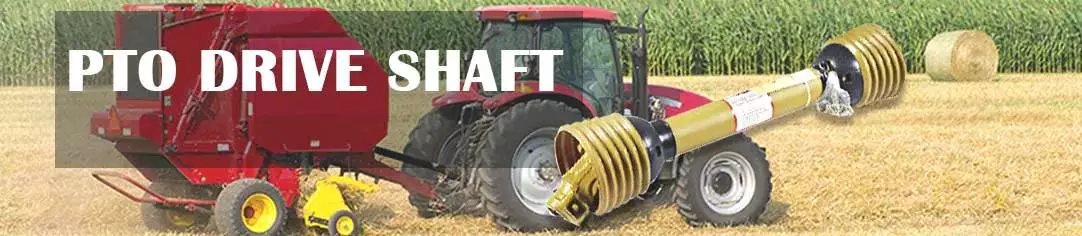
How do tractor PTO shafts contribute to the efficiency of agricultural tasks like mowing?
Tractor power take-off (PTO) shafts play a crucial role in enhancing the efficiency of agricultural tasks like mowing. Here’s a detailed explanation of how PTO shafts contribute to efficiency:
1. Transferencia de potencia: Tractor PTO shafts enable the transfer of power from the tractor’s engine to the mowing implement. The PTO shaft connects the rotating power source (tractor) to the driven component (mower), allowing the transmission of mechanical power. This direct power transfer eliminates the need for separate engines or motors on each implement, reducing complexity and improving overall efficiency.
2. Consistent Power Output: PTO shafts provide a consistent and reliable power output to the mowing implement. The rotational speed and torque generated by the tractor’s engine are efficiently transmitted through the PTO shaft to the mower. This consistent power supply ensures that the mower operates at its optimal performance, resulting in efficient cutting and mowing operations.
3. Adaptability to Different Implements: Tractor PTO shafts are designed to be versatile and adaptable to various agricultural implements, including mowers. They come in standard sizes and configurations, allowing compatibility with a wide range of mowing equipment. This adaptability enables farmers to use different types of mowers, such as rotary mowers, flail mowers, or sickle-bar mowers, with their tractors, providing flexibility and efficiency in tackling different mowing tasks.
4. Adjustable Speed and Height: Tractor PTO shafts, combined with the mower’s design, allow for adjustable cutting speed and cutting height. By adjusting the tractor’s engine speed, the PTO shaft’s rotational speed can be varied, enabling control over the cutting speed of the mower. Additionally, the height adjustment mechanism on the mower allows farmers to set the desired cutting height, ensuring efficient cutting and optimal performance in different field conditions.
5. Efficient Coverage and Maneuverability: Tractor-mounted mowers connected through PTO shafts provide efficient coverage and excellent maneuverability. The wide cutting swath of the mower, combined with the tractor’s mobility, allows for quick and efficient mowing of large areas. This reduces the time and effort required to complete mowing tasks, increasing overall efficiency in agricultural operations.
6. Integration with Tractor Controls: Tractor PTO shafts are integrated with the tractor’s control systems, making it convenient for the operator to engage or disengage the PTO as needed. The operator can control the PTO engagement from the tractor’s cabin, allowing for quick start-up and shutdown of the mower. This ease of control enhances operational efficiency and ensures safe and precise mowing operations.
By facilitating power transfer, providing consistent power output, adaptability to different implements, adjustable speed and height, efficient coverage and maneuverability, and integration with tractor controls, PTO shafts significantly contribute to the efficiency of agricultural tasks like mowing. They enable farmers to accomplish mowing operations effectively, saving time, labor, and resources in the process.
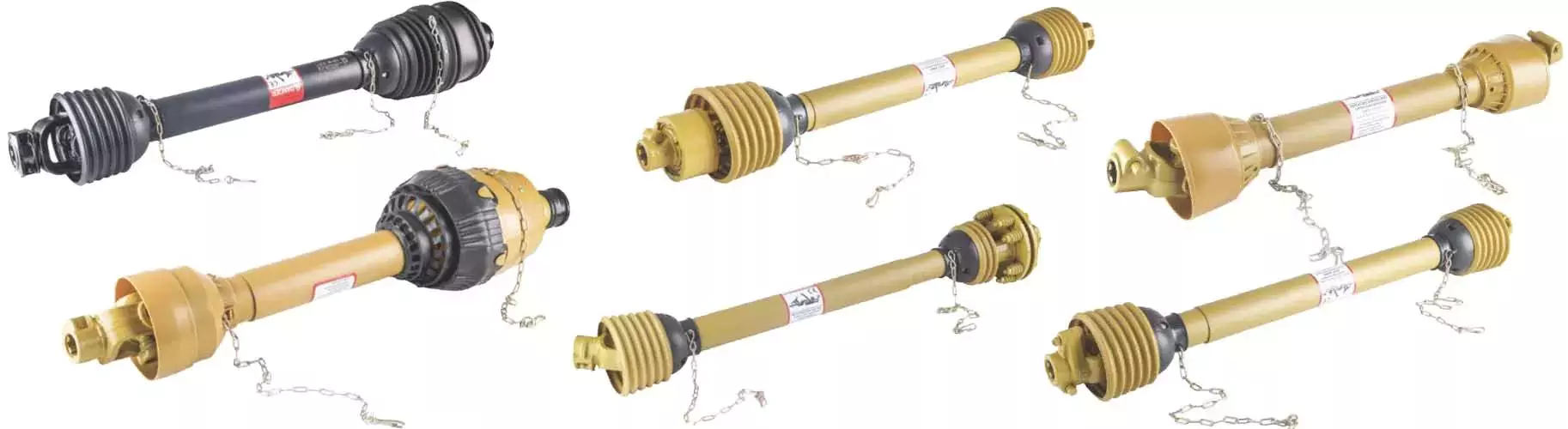
¿Se pueden adaptar los ejes de toma de fuerza del tractor para su uso en diferentes tipos de equipos agrícolas?
Los ejes de toma de fuerza de los tractores suelen poder adaptarse a diferentes tipos de maquinaria agrícola, siempre que se tengan en cuenta ciertas consideraciones. A continuación, se ofrece una explicación detallada:
1. Compatibilidad del eje de toma de fuerza: La primera consideración es asegurar la compatibilidad entre el cardán del tractor y el equipo agrícola. Esto incluye la compatibilidad con el tipo, tamaño y velocidad de rotación del cardán. Dependiendo del diseño y la demanda de potencia del equipo, podrían requerirse diferentes tipos de cardán, como cardán estándar, cardán de ángulo amplio o cardán de velocidad constante (CV).
2. Longitud y alineación del eje de la toma de fuerza: También deben considerarse los requisitos de longitud y alineación entre el tractor y el equipo. En algunos casos, puede ser necesario ajustar o reemplazar el eje de la toma de fuerza por uno de longitud diferente para asegurar la alineación y el acoplamiento correctos entre el eje de salida de la toma de fuerza del tractor y el eje de entrada del equipo.
3. Implementar la conexión PTO: Es fundamental considerar el método específico de conexión de la TDF que utiliza la maquinaria agrícola. Algunos equipos pueden tener un mecanismo de conexión de la TDF diferente, como un tamaño de estría diferente o un método de fijación distinto. Adaptar el eje de la TDF puede implicar el uso de adaptadores, acoplamientos u otros dispositivos de conexión adecuados para garantizar un ajuste seguro y correcto.
4. Requisitos de energía: La potencia requerida por la maquinaria agrícola debe ser igual o inferior a la potencia nominal de la toma de fuerza del tractor. Es fundamental garantizar que la toma de fuerza pueda satisfacer la demanda de potencia de la maquinaria sin exceder su capacidad nominal. De ser necesario, se podría requerir una toma de fuerza de mayor potencia para maquinaria más exigente.
5. Consideraciones adicionales: Dependiendo del equipo específico y sus características, puede haber consideraciones adicionales para adaptar el cardán. Por ejemplo, algunos equipos pueden requerir características de seguridad adicionales, como blindaje o protección, para garantizar la seguridad del operador. Es importante evaluar y abordar cualquier requisito adicional durante el proceso de adaptación.
Cabe destacar que, si bien las tomas de fuerza suelen adaptarse a diferentes equipos agrícolas, en algunos casos pueden existir limitaciones o problemas de compatibilidad. Se recomienda consultar al fabricante del equipo o a un experto cualificado para garantizar la correcta adaptación y compatibilidad entre la toma de fuerza del tractor y el equipo agrícola específico.
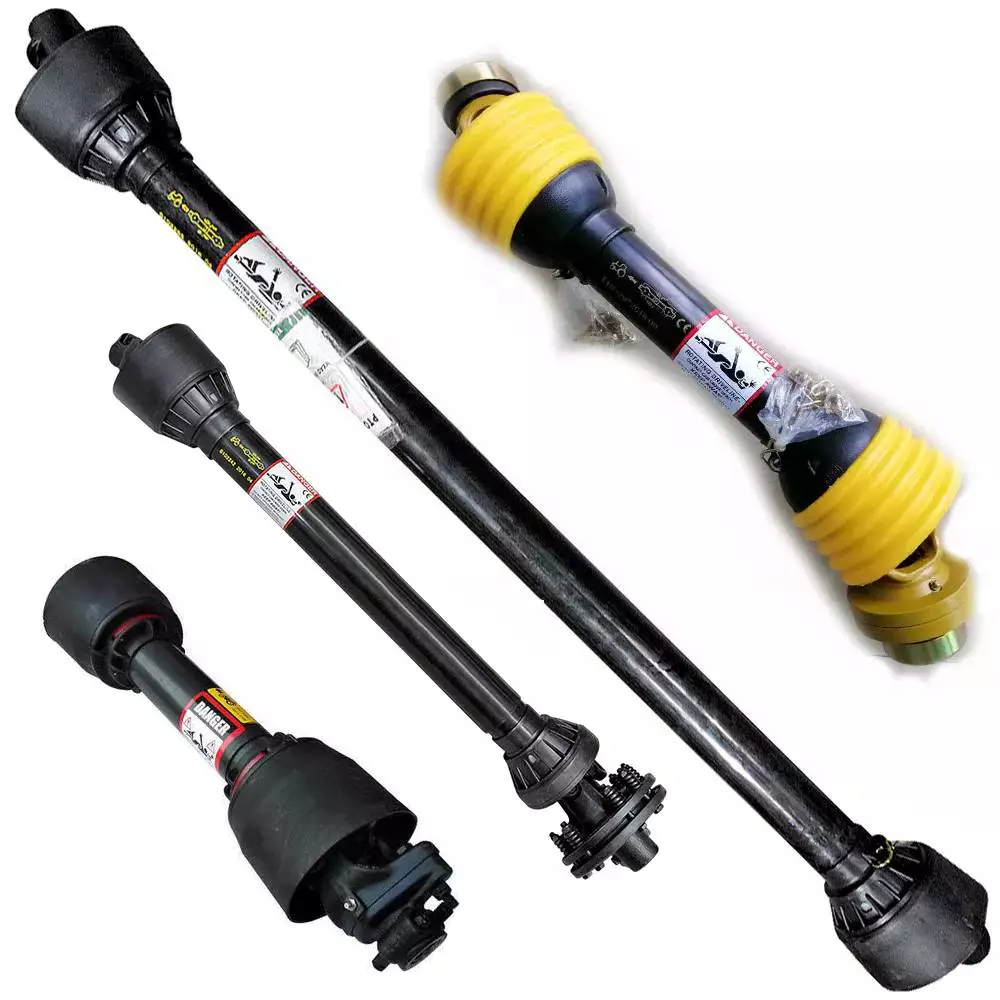
Which Types of Implements and Equipment Commonly Utilize Tractor PTO Shafts?
Tractor power take-off (PTO) shafts are widely used in conjunction with various implements and equipment in agricultural operations. These implements and equipment are designed to be powered by the rotational motion transmitted through the PTO shaft. Here are some of the commonly used types of implements and equipment that utilize tractor PTO shafts:
1. Rotary Mowers:
Rotary mowers are frequently powered by tractor PTO shafts. These mowers are used for cutting grass, weeds, and vegetation in agricultural fields, pastures, lawns, and roadside areas. The PTO shaft drives the rotary blades of the mower, enabling efficient cutting and maintenance of vegetation over large areas.
2. Tillers:
Tillers, also known as rototillers or cultivators, are implements commonly used in soil preparation. They are attached to the tractor’s PTO shaft and driven by its rotational motion. The PTO-driven tiller features rotating tines or blades that break up and aerate the soil, preparing it for planting or seeding.
3. Balers:
Balers are essential equipment in hay and forage production. They are used to gather and compress cut vegetation, such as hay or straw, into compact bales for storage or transportation. The PTO shaft powers the baler’s mechanisms, including the pickup, bale formation, and wrapping mechanisms, ensuring efficient baling operations.
4. Spreaders:
Spreaders, such as fertilizer spreaders or manure spreaders, are commonly used in agriculture to evenly distribute materials over a field. These implements are connected to the tractor’s PTO shaft, which drives the spreading mechanism. The rotational motion from the PTO shaft ensures the proper distribution of fertilizers, seeds, or other granular materials across the field.
5. Seeders and Planters:
Seeders and planters are implements used for sowing seeds and planting crops. They utilize the tractor’s PTO shaft to power the seed metering and planting mechanisms. The PTO-driven seeder or planter ensures accurate seed placement and spacing, facilitating efficient crop establishment and uniform plant growth.
6. Irrigation Pumps:
Irrigation pumps play a crucial role in agricultural irrigation systems. They are often connected to the tractor’s PTO shaft to provide the necessary power for pumping water from a water source, such as a well or reservoir, to irrigate fields or crops. The PTO-driven pump ensures a reliable and efficient water supply for irrigation purposes.
7. Wood Chippers:
Wood chippers are used to process tree branches, logs, and other woody materials into wood chips or mulch. Tractor PTO shafts power the chipping mechanism, which involves feeding the wood into rotating blades that chip the material into smaller pieces. PTO-driven wood chippers are commonly used in forestry operations, landscaping, and biomass production.
8. Post Hole Diggers:
Post hole diggers are implements used for digging holes in the ground, typically for installing fence posts or planting trees. The PTO shaft provides the rotational power required to operate the digging auger. The auger is driven into the ground, creating a hole of the desired diameter and depth.
9. Hay Rakes and Tedders:
Hay rakes and tedders are implements used in haymaking operations. They are connected to the tractor’s PTO shaft to power the rotating rake or tedder mechanisms. These implements help fluff, spread, and turn the cut hay, ensuring proper drying and curing before baling.
10. Grain Harvesters:
Grain harvesters, such as combine harvesters or forage harvesters, are large machines used for harvesting grain crops or forage crops. Tractor PTO shafts are utilized to power various components of the harvester, including the cutting head, threshing mechanism, and grain or forage collection systems. The PTO-driven harvesters streamline the harvesting process and improve efficiency.
These are just a few examples of the many implements and equipment that commonly utilize tractor PTO shafts. The versatility of PTO shafts allows for the efficient powering of a wide range of agricultural machinery, contributing to the productivity and effectiveness of farming operations.


editor by CX 2023-09-15